Where the Tank Goes: Check the Floor, Reach, and Daily Route
Choose an aquarium site by weighing the support beneath it, the work you must do around it and how it fits the room’s everyday traffic.
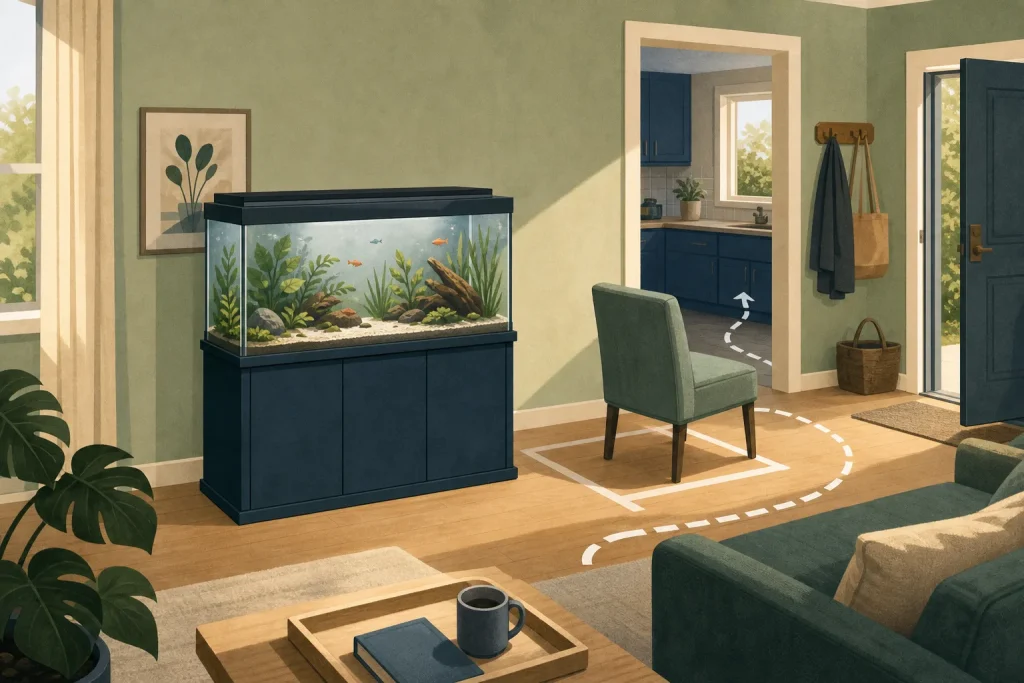
An aquarium belongs where its filled weight is supported, its equipment is easy to reach and people can pass without brushing against it. Those conditions are easier to judge before the tank is filled, when changing the plan is still simple. Start with the floor and stand, then consider maintenance, household traffic and the room’s conditions.
Is the floor and stand a sound match?
A purpose-built aquarium stand on a firm, level floor is usually the simplest starting point. The stand should suit the tank’s shape and support it as its maker specifies. Check that it does not rock, its joints are sound and the floor beneath it does not slope or flex noticeably. A filled aquarium is heavy; a decorative sideboard that looks sturdy is not automatically suitable.
If the tank is large, the building is older or you are unsure about the floor, pause before installation. A solid-looking surface does not reveal what lies beneath it or how its structure carries the load. Ask a qualified builder or other suitable professional to assess the proposed position rather than guessing. This is especially sensible on upper floors or where the tank would sit over a span between supports.
For a small aquarium on a stable cabinet, the decision may be more straightforward, but the same checks still apply. Follow the tank and stand instructions about how the base should be supported. Do not compensate for an uneven floor with scraps of card or loose wedges unless the stand’s manufacturer specifies an appropriate method. If the cabinet twists or rocks, choose another location or resolve the support issue before filling.
Say you have an empty tank and a cabinet near a doorway. You press gently at its corners and see it wobble. Move the plan to a sounder stand rather than hoping the water will steady it; the observable result should be a level, stable setup with no movement at the joints. Keep the tank empty until that decision is made.
Can you reach the equipment without awkwardness?
If you can reach the lid, filter and heater controls without leaning over the tank or dragging furniture aside, routine care is more likely to stay manageable. Leave working space above and around the aquarium. The necessary clearance depends on the tank and equipment, so check the manufacturers’ instructions and consider how you will remove a lid, lift a filter component or siphon debris.
A tank tucked into a tight alcove can look neat but become awkward if you cannot reach the back panel or remove equipment for cleaning. Choose a position with better access, or confirm that the equipment can be serviced from the available side. A clear route for a bucket and siphon matters too: maintenance is harder if you must step over cables or move a chair each time.
Think about power before settling on a spot. Place equipment near a suitable outlet and arrange cables so they are not easily pulled or tripped over. Keep plugs and connections away from places where splashes or drips may reach them. Electrical requirements depend on the room, the installation and local rules, so follow the equipment instructions and relevant local guidance; ask a qualified electrician if you are uncertain. Avoid relying on an extension lead stretched across a walkway as a permanent arrangement.
Elaborate cable concealment or a custom cabinet is not worth the effort if it blocks ventilation, access or safe servicing. A tidy cable route and reachable controls matter more than hiding every wire.
Does the tank interrupt the room’s daily route?
A site beside a busy doorway, narrow passage or place where people set down bags may expose the aquarium to knocks and crowding. Choose a quieter edge of the room where people can pass without brushing the glass or stand. Check the door’s full swing and keep the tank clear of places where children or pets are likely to bump it.
If you want the aquarium to be a focal point, place it where people can pause without blocking circulation. A living-room wall with open space in front may work better than a hallway, even if the hallway seems convenient for power or plumbing. Sit where you expect to view the tank and check for glare from windows or lamps. There is no need to optimise every viewing angle; avoid the obvious conflict between a prized view and a route people must use.
Imagine you are considering a corner between a sofa and the main path to the kitchen. The starting point is an empty room and the proposed tank’s footprint marked with removable tape. Move a chair into that space, then walk the usual route while carrying a mug. If you have to turn sideways or brush the chair, choose the quieter wall instead. The visible result should be an unobstructed route and a calm place to sit and watch the fish.
Will the room’s conditions suit the location?
If the proposed site receives strong direct sunlight, shares a wall with a radiator or sits beside a frequently opened exterior door, consider another position. Sunlight can encourage unwanted algae and add heat; nearby heating and draughts can make temperature less steady. Think about how the spot behaves in warm and cold weather rather than judging it on one comfortable day.
If the only available position is near a window or heat source, reduce direct exposure where possible and check the aquarium’s temperature with suitable equipment after setup. Do not rely on curtains or room temperature alone to control a tank. If conditions change sharply through the day, a more sheltered location is usually the simpler choice.
Also consider what the tank sits beside. A television, speaker or frequently used door may bring repeated movement and noise close to the glass. Fish respond to their surroundings, and a quieter viewing position can be more considerate than a prominent spot beside a busy household centre. The aim is not silence; it is to avoid disturbance that is easy to prevent.
Which location fits the evidence you can see?
- Check the stand: If it is designed for the tank, sits level and does not rock, keep it under consideration; if it shifts or is damaged, repair or replace it before filling.
- Check the floor: If it appears firm and level and you have no reason to doubt its support, proceed with the other checks; if it slopes, flexes or the building’s capacity is uncertain, pause and ask a suitable professional to assess the position.
- Check maintenance access: If you can reach the lid, filter and controls and carry a bucket without obstruction, the site is workable; if not, move the tank or choose equipment that can be serviced from the available side.
- Check cables and connections: If the route keeps cables out of the way and connections clear of likely splashes, follow the equipment instructions and applicable local guidance; if not, change the layout and seek an electrician’s advice where installation safety is unclear.
- Check the everyday route: If people can pass and nearby doors can open without contact, keep the position in consideration; if the tank narrows a passage or enters a door’s swing, choose another wall.
- Check sunlight and nearby heat: If the site is sheltered from strong direct sun, radiators and draughts, proceed to the remaining checks; if exposure is unavoidable or conditions vary sharply, choose a more sheltered position.
- Check the viewing position: If the glass is visible without troublesome glare and people can pause without blocking circulation, the location serves both viewing and movement; if not, adjust the angle or select a quieter wall.
Before filling, mark the tank’s footprint on the floor with removable tape and leave it there while you use the room normally. Walk past it, open nearby doors and consider how you will reach the equipment. That quiet rehearsal often reveals what a floor plan misses: a suitable location supports the tank and makes its care practical without making the rest of the room harder to use.